
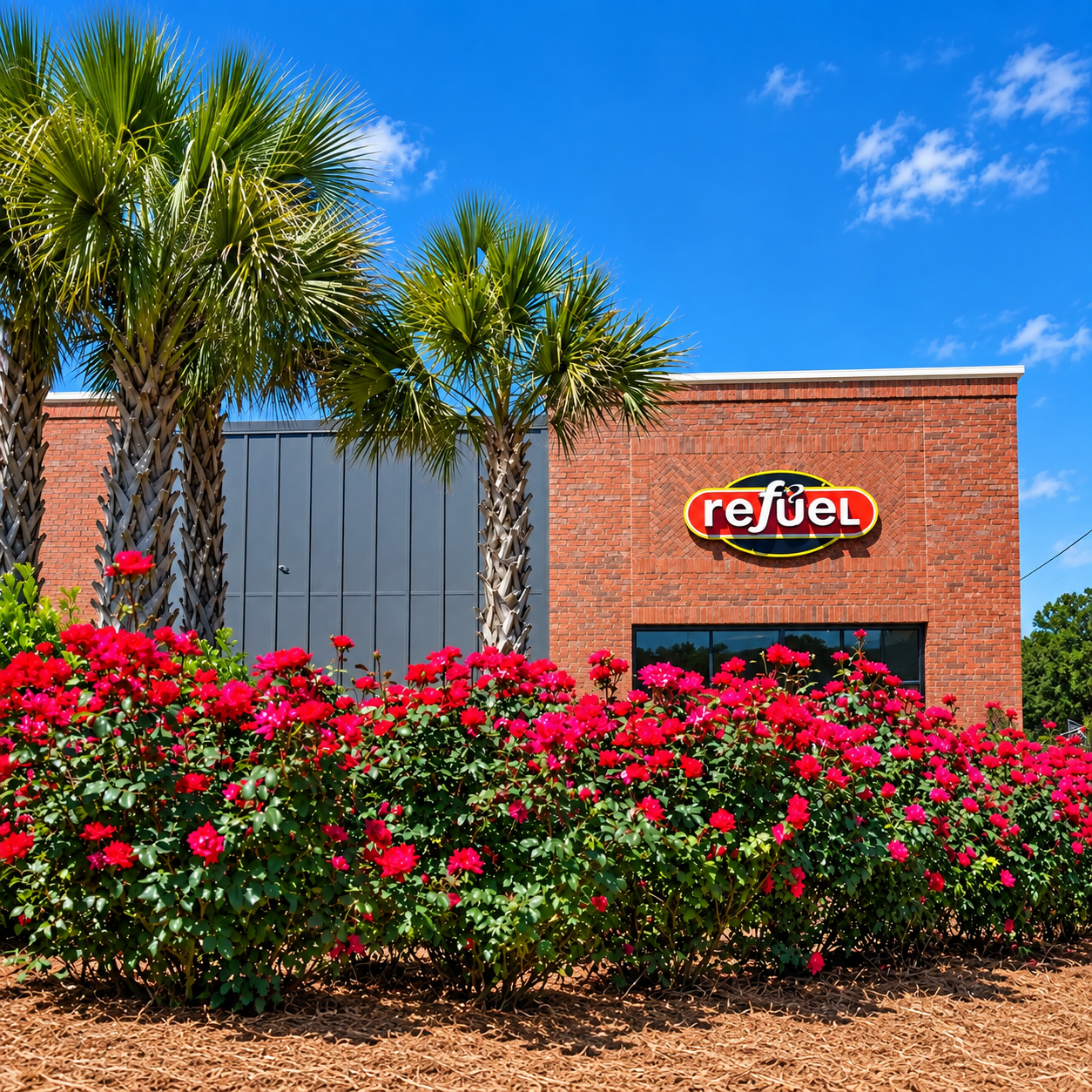
Getty Realty Corp. has closed a $260.9 million sale-leaseback transaction with Refuel Operating Co., acquiring 41 of the North Charleston, South Carolina-based operator’s roughly 250 convenience stores. The portfolio includes 17 stores in South Carolina, 12 in North Carolina, seven in Texas and five in Mississippi.
Refuel will continue operating all 41 locations under leases with initial terms of 20 years and multiple renewal options, with no changes to how the stores are managed. Each site includes either a proprietary hot food program or a branded quick-service restaurant. The stores average nearly 5,000 square feet on sites of about 2.5 acres, well above the footprint of a traditional c-store.
Refuel’s co-CEOs, Travis Smith and Jon Rier, said the transaction gives the company a more balanced mix of owned and leased real estate and a more efficient capital structure. They added that it frees up flexibility to keep investing in stores, employees and long-term growth. Founded in 2008, Refuel operates under the Refuel and Double Quick banners across South Carolina, North Carolina, Texas, Mississippi and Arkansas. It ranks No. 38 on CSP’s 2026 Top 202 list of U.S. c-store chains and has been owned by private equity firm First Reserve since 2019.
The deal is Refuel’s first portfolio sale-leaseback, but it builds on an existing relationship. Refuel already leases six c-stores from Getty, five of which were new-to-industry builds financed through Getty’s development funding program. Getty President and CEO Christopher Constant pointed to Refuel’s brand, growing platform and real estate quality as a strong fit with the REIT’s underwriting criteria. Getty has invested about $455.2 million in convenience and automotive retail assets so far in 2026.
The transaction highlights a growing playbook among c-store operators. Sale-leasebacks let operators unlock the capital tied up in their real estate without adding debt or giving up ownership of the business. That capital can then be redeployed into remodels, new builds, technology or acquisitions, while the operator keeps full control of day-to-day operations.
Buyers, meanwhile, are aggressively competing for c-store real estate. Institutional capital has been drawn to the sector’s long-term stability, and larger-format stores with strong foodservice and QSR components have become especially sought after. Those sites tend to drive more traffic and in-store spending and are better positioned as consumer habits shift. The 20-year lease terms and prepared-food focus of the Refuel portfolio fit that profile closely.
Tax policy is adding to that demand. The permanent return of 100% bonus depreciation has made qualifying c-store real estate even more attractive, since investors may be able to deduct a significant portion of their purchase price in the first year of ownership. The benefit has broadened the buyer pool to include private 1031 investors as well as large institutions, which supports pricing for sellers. Investors should consult their tax advisors on how bonus depreciation applies to a specific property.
If you would like to discuss how this update may impact your acquisition or disposition strategy, please reach out to the Knipp Wolf Net Lease Group.
Source: CSP Daily News

Leave A Comment